1. Plan Ahead and Prepare
Understand park rules, weather forecasts, and route hazards. Pack layered clothing, extra provisions, and download offline navigation maps to handle sudden microclimate transitions.
Learn how to minimize your impact, keep safe distances from wildlife, and protect the fragile ecosystems of Canada and the United States.
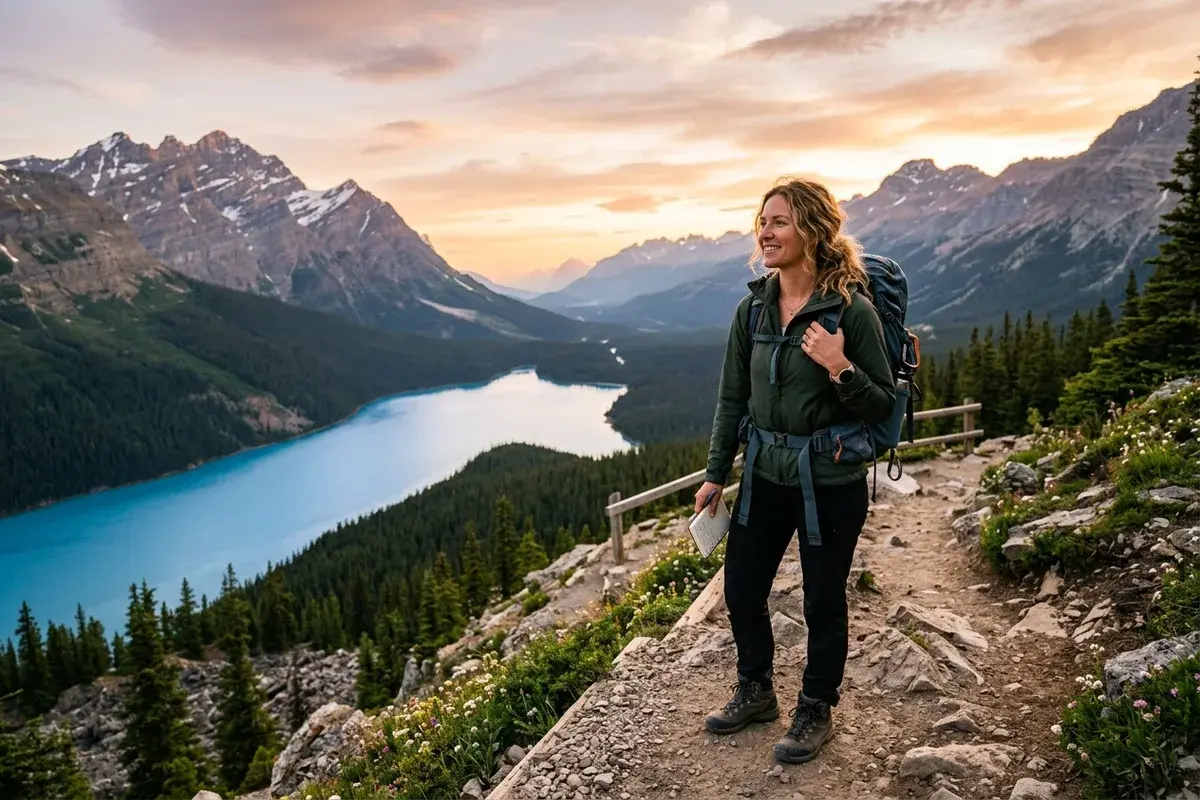
We urge all travelers to follow the fourteen guidelines of Leave No Trace when visiting national parks:
Understand park rules, weather forecasts, and route hazards. Pack layered clothing, extra provisions, and download offline navigation maps to handle sudden microclimate transitions.
Stay strictly on marked trails to protect fragile alpine tundra, mosses, and coastal soils. Avoid shortcutting trail switchbacks, which accelerates soil erosion.
Carry all trash, food remnants, and litter out of the trails. Secure food in bear-proof containment units or hanging canisters to prevent attracting predators.
Preserve nature. Leave rocks, wildflowers, plants, fossils, archaeological items, and other natural objects as you find them for future travelers to enjoy.
Check fire bans daily. Use designated metal fire rings when fires are permitted, and put out fires completely until ashes are cold to the touch. Do not gather firewood from live branches.
Never feed wildlife; this alters natural feeding habits, makes them dependent, and exposes them to traffic hazards. Observe animals from afar using binoculars or zoom lenses.
Yield to uphill hikers. Keep noise levels low by leaving speaker systems off, allowing others to hear the sounds of nature, and respect trail spacing limits.
Carry at least 4 liters of water in dry desert zones like Zion. Do not rely on natural streams unless you possess certified filtration pumps to eliminate bacteria.
Keep dogs on standard 6-foot leashes and verify pet exclusion zones before starting trails. Many national parks exclude pets from deep backcountry routes to protect local wildlife.
Utilize small local guest houses, gateway diners, and regional outfitters. This ensures your travel expenditures directly benefit the communities surrounding park borders.
Use park shuttle networks where available (such as Zion or Yosemite Valley). Carpool with other hikers to reduce greenhouse gas accumulation in tight canyons.
Leave old buildings, historical stone structures, petroglyphs, and Native American monuments undisturbed. Do not touch or mark historic rock surfaces.
Cell coverage is weak in canyons and forests. Always carry a physical compass, topo maps, trail whistles, and a satellite messenger for remote emergencies.
Pack reusable stainless steel or BPA-free water flasks. Avoid bringing plastic wrappers or single-use bags that can blow away in strong wilderness winds.
Complete compliance guidelines when observing animals in their natural habitats.
Maintain a minimum distance of 100 meters (110 yards) at all times in Jasper and Yosemite. Double this for nesting mothers.
Maintain a distance of at least 25 meters (27 yards) from larger grazing mammals. Stand back if they display defensive posture.
Maintain at least 200 meters from killer whales and 100 meters from other marine mammals on Vancouver Island coasts.
Maintain a safe distance and never feed them. Feeding chipmunks human food makes them dependent and can spread disease.
Our team regularly reviews regional alerts, highway parameters, and weather warnings. If you notice unsafe trail conditions, illegal wildlife feeding, or trash buildup on any route we guide, please let us know.
Email our environmental ethics representative: ethics@your-whim.com